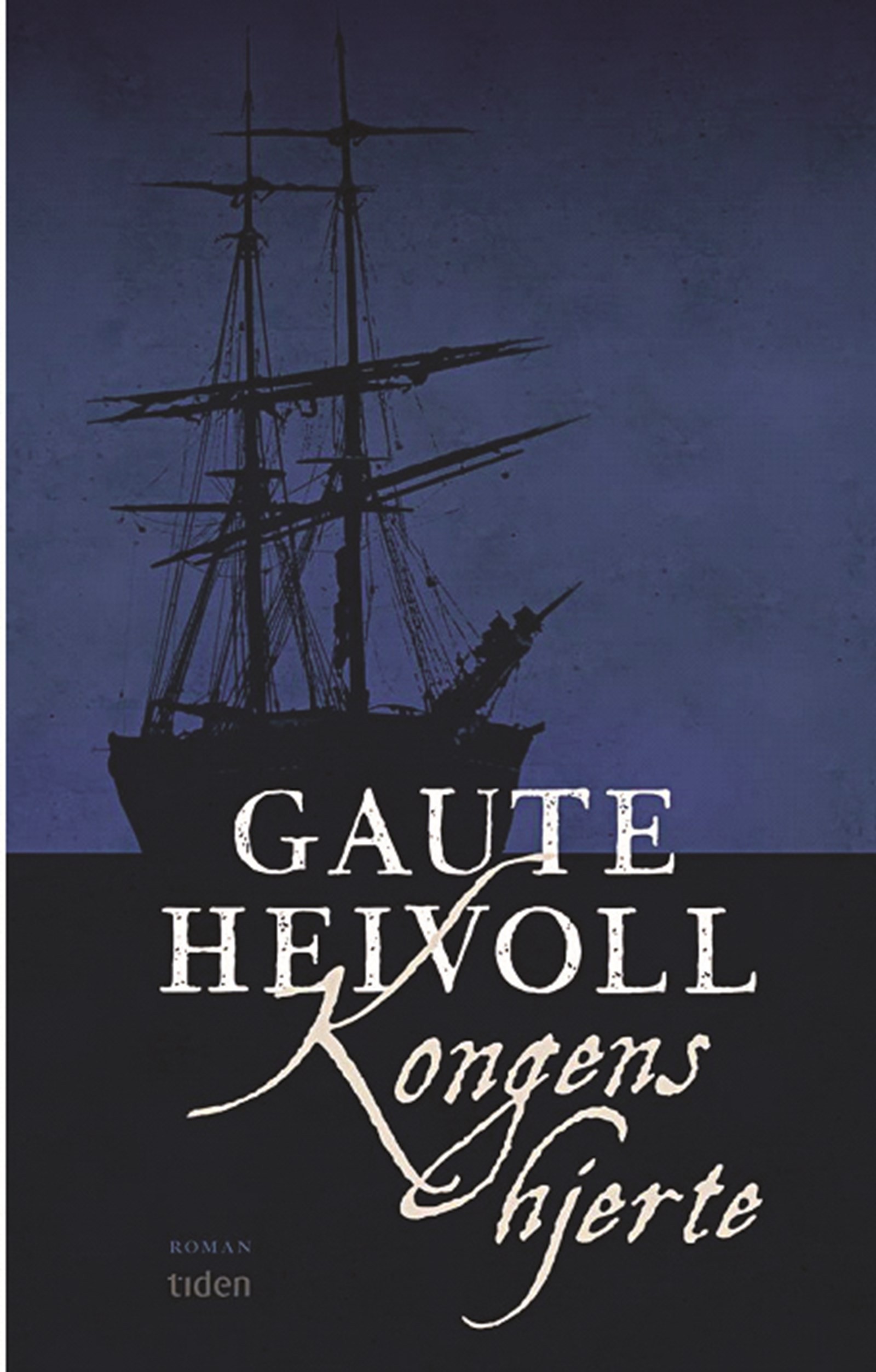
By Gaute Heivoll
With them are ten other sufferers. The year is 1775, and they are going to Copenhagen, to King Frederik’s Hospital, to be cured of the epidemic that has taken so many lives. But the crossing is not without danger, and the longer the voyage takes, the more the insanity increases among the patients. Meanwhile the father is witness to his daughter being slowly but surely consumed by the illness from inside. He has lost his wife and another child previously. He has only her left. Will she survive?
The King’s Heart is a compact, intense human drama, based on real historical events. From the pages emerges a pitch black world – an account of hell among the living – where death threatens at every turn. Yet the novel is shone through with the strongest emotion of all: love for a child. This is a masterly performance, a story written in almost hypnotic language, showing death and love in close proximity.
Gaute Heivoll (born 1978) is a prolific and varied author. He has written novels, short stories, poems and children’s books In 2010 he broke through with [], which won the Brage Prize the same year and was sold to eighteen countries. is Heivoll’s fifth novel.
With highly sophisticated prose, [Heivoll] depicts the relationship between a father and his plague stricken daughter during their voyage to Denmark in 1775 ... It's grand, without pathos and at the same time deeply moving in a real way
6/6 stars, Berlingske, DenmarkWith The King's Heart, Heivoll has added yet another engaging story to his ten-year old, industrious authorship
Weekendavisen, Denmark[A] sharp, heartbreaking story about the perseverance of paternal love
Jyllands-Posten, DenmarkTight, gloomy and beautiful
NRK P2This is one of the most painful but also most beautiful stories I have read for a long time ... The sentences have a shining clarity
DagsavisenWhat is perhaps most impressive in this at times slow novel is its strong inner suspense. A powerful flow rooted in the style, but also in the uncertainty of what will happen with the two main characters. In this the novel is like a greek drama
DagbladetAnother confirmation that Heivoll must be one of our finest young writers. When it's all over, I'm left with gratitude that he chose to take me along for this journey
DagsavisenHeivoll is best when he shows us the strong fear, feeling of powerlessness and homesickness that the father experiences both on the voyage across the Skagerrak and later, during the isolation at the hospital
THE KING\'S HEART - sample translation(pdf, 142,28 kB)
Masterfully executed. So good that you feel sad when you reach the end
Haugesunds AvisGaute Heivoll's talent for making dramatic events come alive without resorting to big words and sensational devices, is impressive. In spite of the great distance in time to the events, he manages to make this story about a father and a daughter into an intimate and gripping drama, quite simply a piece of moving literature
Tønsbergs BladBut even in the most hopeless situations, dreams can transport the dreamer to light and beautiful places. Where a mix of good memories and ecstatic imagination can arise. It's quite a feat to do this in a novel with a minimum of clichees. Gaute Heivoll has succeeded in this
TelemarksavisaHeivoll's material contains a huge drama, and one of the reasons he succeeds is that he doesn't get sentimental. On the contrary, his prose is concrete and very sensuous in its descriptions of the physical surroundings
Oppland ArbeiderbladThis is pitch black, but so fascinating that you are tempted to making the journey one more time
VardenAnother proof of Heivoll's confident narrative voice
Vårt LandTHE KING'S HEART can remind you of Cormac McCarthy's latest novel, the dystopian allegory THE ROAD
KlassekampenGaute Heivoll reinvents himself and convinces once again
Dag og TidOnce in a while I read books that make me think that there is no need for any writer to ever write anything again. This was my thought at the beginning of [THE KING'S HEART]. In the beginning it wasn't the action that pulled me in, the story unfolds very slowly. It was the prose that made me resign on behalf of all writers. I was almost in shock from the sparse, beautiful writing, which doesn't contain one word too many, or one word too few
Gudbrandsdølen Dagningen