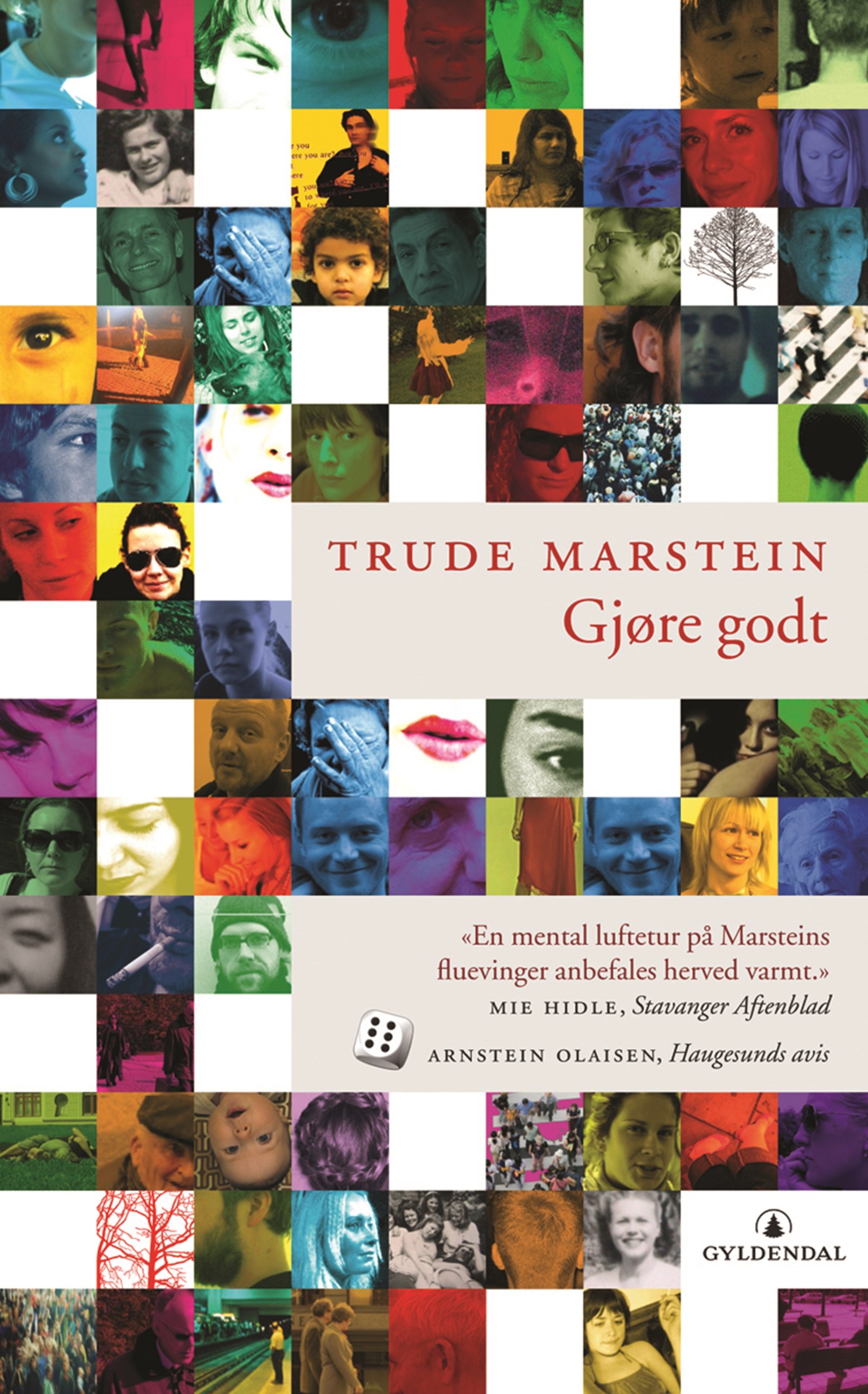
Doing Good
By Trude Marstein
Description
Critics' Prize 2006. P.O. Enquist Prize 2006
In the second half of the book it goes back to Saturday morning. It is a beautiful composition, very elegantly mastered, and at the same time a very good read, showing a mosaic of destinies that together make up a large picture, a picture of life itself. Marstein is indeed a literary voice to notice.
As one of the critics said: “Outstanding, teeming ant hive novel which above all impresses through the perfection of the writer's handicraft. The book is so to speak a perfect composition. It moves and involves as a collective account.”
Saturday night has just turned to Sunday as Peter approaches the town where he is about to start a new job. In a train travelling in the opposite direction Peter catches sight of his ex-lover Karoline leaving the town. Peter and Karoline are just two of the hundred and twenty characters that inhabit Trude Marstein’s daringly constructed novel, Doing Good. This is a novel in which the city and time create the framework, and the five senses create the composition. Shifting effortlessly from narrator to narrator, this novel captures the most diverse characters and environments, all within a small Norwegian town and in the space of one July weekend. A book about passion and death, work and escape, drunkenness and reconciliation, bewilderment and reflection. And ultimately about how, as human beings, in the midst of all life throws at us, we struggle to do good.